For thousands of families welcoming relatives or tourists exploring the Emirates, the question of “what happens if I get sick?” is often the biggest source of travel anxiety. As of January 1, 2025, the UAE has officially unified its healthcare mandates across all seven emirates, making health insurance a non-negotiable part of the visitor experience.
Whether it’s a sudden seasonal flu, a minor injury at a mall, or a critical emergency, knowing the legal landscape of UAE healthcare for visitors is essential for a stress-free stay.
Table of Contents
The 2025/2026 Mandatory Insurance Rule
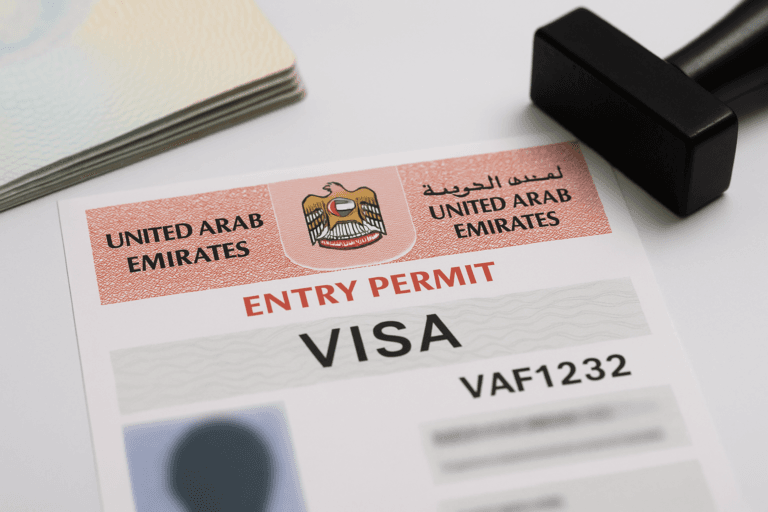
Entering the UAE without health insurance is no longer a possibility for travelers. Under the Unified Basic Health Insurance rules implemented last year, all visit visas (30 or 60 days) must be linked to a valid medical insurance policy at the time of issuance.
- Minimum Coverage: Standard visitor policies must provide at least AED 150,000 in medical coverage.
- Geographic Scope: Your insurance is now valid nationwide. A policy issued for a Dubai visa is legally accepted in Sharjah, Abu Dhabi, and the Northern Emirates.
- COVID-19 & Repatriation: Approved plans include emergency pandemic care and the cost of repatriation in extreme cases.
Always keep a digital copy of your Insurance Certificate (the one attached to your visa) on your phone. UAE hospitals now use digital portals to verify your “Direct Billing” eligibility instantly.
Emergency Rights: The “Duty to Stabilize”
A common fear for tourists is being turned away from a hospital due to a lack of upfront funds. In the UAE, the law is very clear on this to ensure human dignity and safety.
Under Federal Decree-Law No. 4 of 2016 on Medical Liability, no healthcare facility (private or public) can deny a patient in a life-threatening emergency.
- Ambulance Service (Dial 998): This will dispatch a professional emergency team to your location anywhere in the UAE.
- Immediate Care: Hospitals are legally required to stabilize a patient regardless of their ability to pay or insurance status.
- Post-Stabilization: Once the immediate life threat is removed, the hospital will then coordinate with the insurer or discuss billing for the ongoing recovery.
Getting Non-Emergency Treatment
For non-emergencies—like a nagging toothache, a persistent viral fever, or a minor sprain—the process differs significantly from what a resident with an Emirates ID experiences.
The “Pay and Claim” Reality
Most standard visit visa insurance plans do not offer direct billing at small private clinics.



- The Process: You visit the clinic, pay the consultation fee, and then submit the medical report and invoice to your insurance provider for reimbursement.
- Consultation Costs: Expect to pay between AED 200 and AED 500 for a General Practitioner (GP) visit at major private groups like Aster, NMC, or Prime.
Pharmacies and Medication
Visitors pay the full market price for medications. Unlike residents with “Essential Benefits Plans” who pay a standardized co-pay, tourists must cover the total cost at the pharmacy counter. Always keep your original receipts; many travel policies will reimburse these costs if they are linked to an acute illness diagnosed during your trip.
Documentation Checklist for Visitors
Since you do not have an Emirates ID, your passport becomes your primary medical file. When visiting any UAE hospital or clinic, ensure you have:
- Original Passport (and a digital copy of your Visa page).
- Insurance Certificate: This must show the policy number and the 24/7 helpline.
- Prescription Records: If you are bringing chronic medication from home, carry the original doctor’s prescription to avoid issues at pharmacies or customs.
Summary Table: Visitors vs. Residents
| Feature | Visit Visa Holder | UAE Resident (Work Visa) |
| ID Required | Passport & Visa Copy | Emirates ID |
| Payment Mode | Usually Upfront (Reimbursement) | Direct Billing (Co-pay only) |
| Chronic Care | Limited to Emergencies | Fully Covered (Mandatory 2025) |
| Maternity | Not Covered | Mandatory Coverage |
The UAE’s transition to a Unified National Health Insurance system has created a safer environment for tourists. You are no longer “uninsured” by default; your visa is your shield. However, always remember that visitor insurance is designed for emergencies, not routine check-ups.
If you are hosting a relative, check if their policy has a “Direct Billing Network” near your home. Knowing which hospital accepts their insurance can save you from paying large upfront deposits during a stressful crisis.