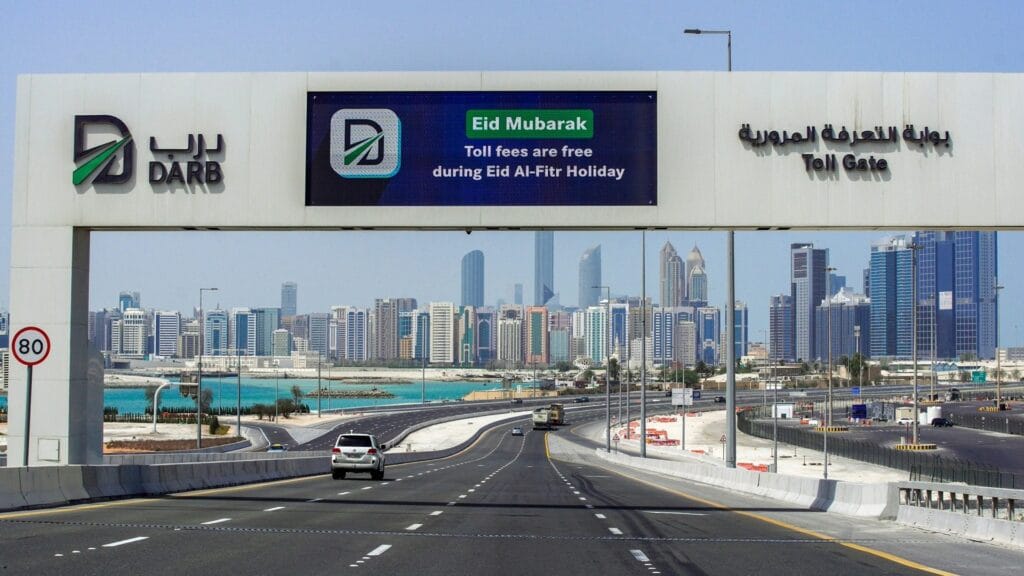
The Integrated Transport Centre has tightened Abu Dhabi traffic diversion rules and announced Darb toll changes that take effect this year. Drivers, contractors, and fleet operators face new permit requirements, longer evening toll hours, and the end of several toll caps. These moves will change how people plan travel and manage road projects.
Table of Contents
Stronger control on diversion permits and site safety
The ITC’s revisions make it clear: permits for traffic diversions must be accurate and used only by the holder. That means no transferring of NOCs between firms or crews. The new wording also gives inspectors more power to suspend or cancel permits on the spot when safety measures aren’t met.
Emergency work can start, but only under strict conditions. Where quick fixes are needed, contractors may begin work and then regularise the permit within a short window. The idea is to balance responsiveness with safety — so temporary measures don’t become long-term hazards.
Darb toll updates 2026 and new daily timings

Darb toll timings are being adjusted to match how people move around the city. Morning charges remain at 07:00–09:00. Evening charging now runs from 15:00 to 19:00, widening the afternoon peak and covering more of the late-day commute. Sundays and official holidays continue to be toll-free.
Officials say the changes aim to spread traffic, not punish motorists. But for regular cross-city commuters, the removal of daily and monthly caps will be noticeable at the end of the month.
Financial effect of removing Abu Dhabi Darb toll caps
The government has done away with the Dh16 daily cap and the tiered monthly caps for private cars. Practically, that means each trip in charge hours carries the regular fee. Exemptions — for people of determination, retirees, and certain low-income groups — remain in place.
For people who rely on repeated crossings, this change shifts costs from a predictable monthly figure to a more variable, per-use expense. Fleet budgets and personal routines may need a rethink.



Enforcement and compliance for contractors and operators

Construction companies and event organisers must check their paperwork before work starts. The ITC has published clearer definitions and step-by-step guidance for permits and fines. If you cut corners, expect fast enforcement: permits can be revoked and penalties applied immediately.
From a practical point of view, this raises the bar on site planning. Teams that plan properly will face fewer delays. Those that don’t may find projects held up while they sort out NOCs and updated traffic-management plans.
Practical steps for motorists and fleet managers
Drivers can avoid extra charges by shifting travel outside the extended 15:00–19:00 window where possible. Fleet managers should review delivery and shift timetables to reduce crossings during charge hours. Contractors should double-check site layouts and NOC forms before dispatching crews.
Also, follow official ITC announcements. The agency will publish maps and digital permit updates online, which help avoid surprises on-site and on the road.