Ras Al Khaimah has formally set out the Ras Al Khaimah Integrated Sustainability (RIS) Strategy 2050, a multi-sector roadmap that targets deep emissions reductions while preserving industrial competitiveness. The plan, coordinated by Reem under the municipality’s mandate, lays out programmes for energy and water security, environmental protection and sectoral decarbonisation.
Table of Contents
Strategy scope and structure
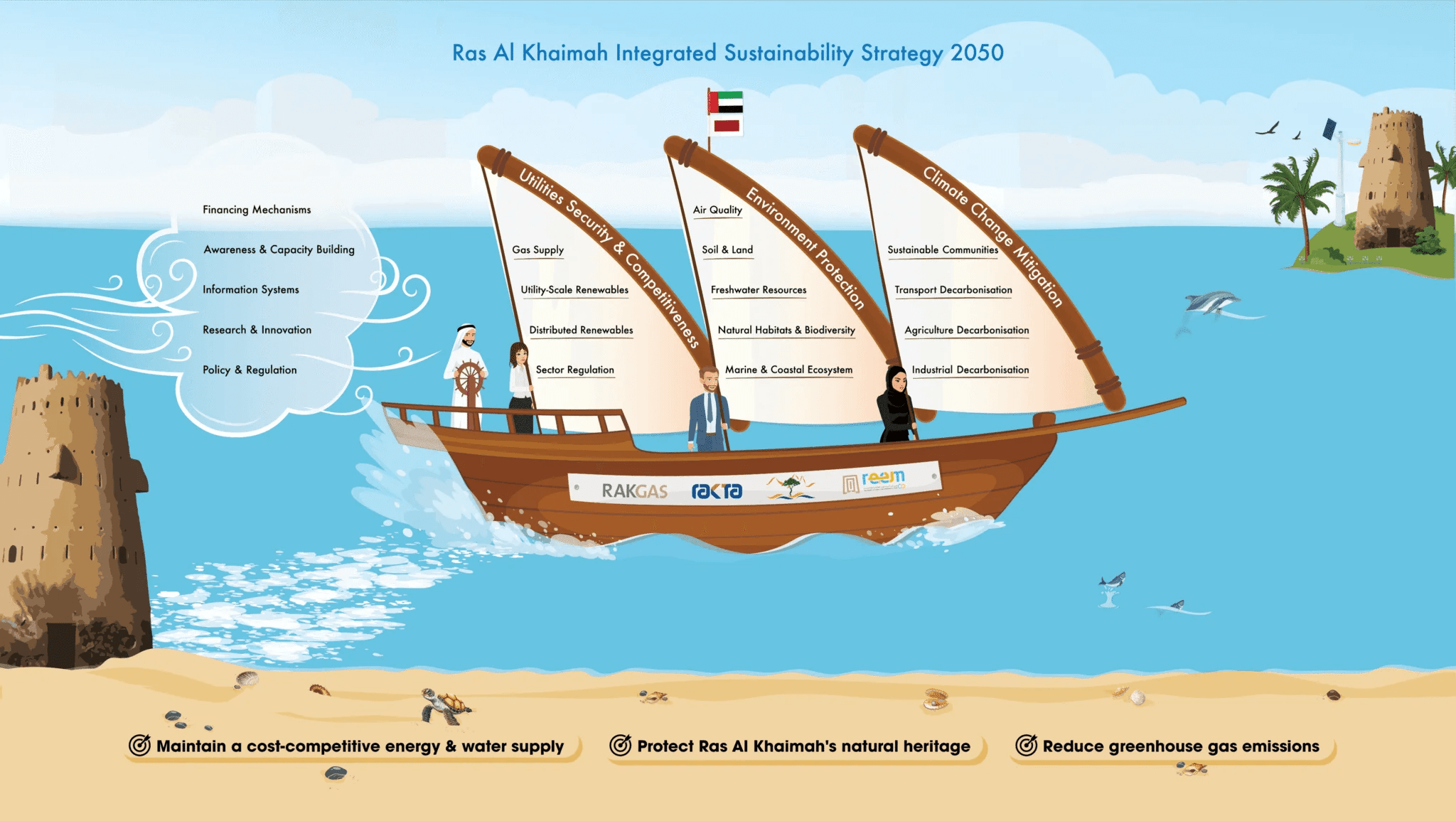
The RIS 2050 package expands the emirate’s earlier Energy Efficiency & Renewables Strategy 2040 and is organised around three pillars: utilities security and competitiveness; environmental protection; and climate-change mitigation across communities, transport, agriculture and industry. The plan lists 13 programmes that translate the pillars into operational initiatives.
The RIS references the 2040 targets — at least 30% electricity savings, 20% water savings and 20% renewables contribution — as interim milestones while aligning with national net-zero commitments.
Renewable energy rollout
Reem prioritises utility-scale solar, distributed rooftop installations and energy storage to reduce reliance on gas-fired generation. The strategy documents outline project pipelines in industrial zones and commercial districts, and propose regulatory and procurement measures to accelerate deployment. Reem also highlights financing and permitting schemes to unlock private investment.
Industrial decarbonisation measures
The strategy places heavy emphasis on cutting emissions from energy-intensive sectors such as cement, ceramics and construction materials. Core measures named in the RIS include:
- substituting clinker in cement with slag and fly ash;
- introducing alternative and waste-derived fuels in kilns;
- deploying waste-heat recovery systems; and
- mandating industrial energy audits and energy management systems.
Carbon capture and utilisation developments
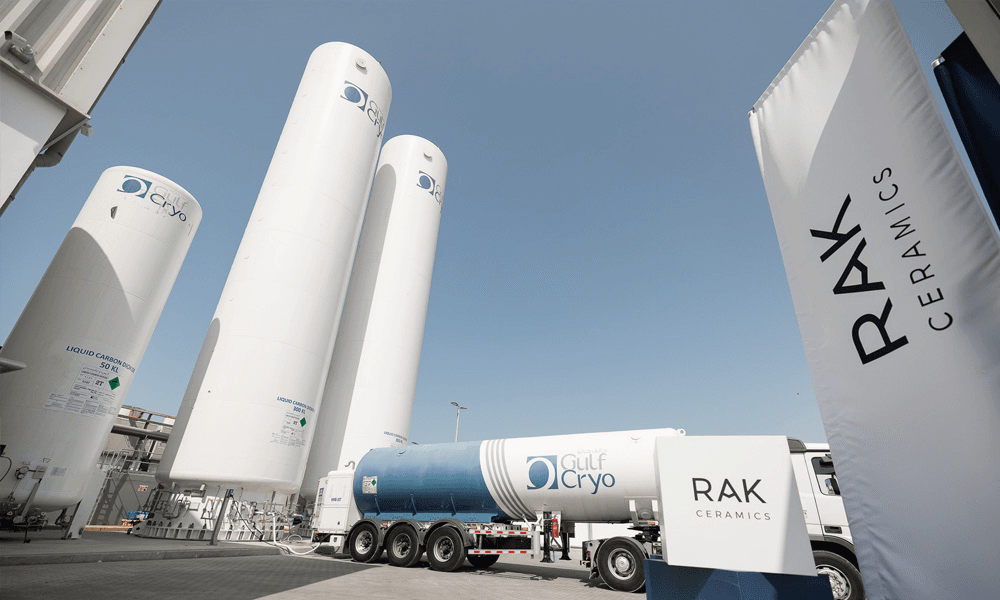
Private-sector projects are already moving ahead. RAK Ceramics in partnership with Gulf Cryo has opened a facility in Ras Al Khaimah to capture CO₂ from production engines and upgrade it to 99.99%-pure, food-grade CO₂. The plant captures roughly 17,000 tonnes of CO₂ annually and supplies gases to food, healthcare and industrial users. Reem cites such projects as proof points for industrial emissions management under RIS 2050.
Buildings and green codes
Barjeel green building regulations remain a central tool for the built environment. Reem and the municipality report more than 4,500 Barjeel-compliant buildings and over 400 retrofit projects to date, aimed at lowering cooling loads and improving envelope performance across new and existing stock. These measures feed directly into the RIS monitoring indicators for electricity savings.
Water security and reuse
The RIS underscores water efficiency and reuse as strategic priorities. The plan aligns with national targets that seek to reduce total water demand and raise treated wastewater reuse to roughly 95% by 2036. Reem’s programmes include expanding industrial reuse, upgrading wastewater treatment capacity and rolling out smart metering and leak detection.
Waste and circular economy actions
Waste diversion and industrial symbiosis are highlighted for the construction and manufacturing sectors. The strategy sets out to scale recycling infrastructure, increase material-recovery rates and promote by-product exchange between facilities to reduce landfill volumes and embodied carbon in building materials.



Transport and urban measures
RIS 2050 includes transport decarbonisation measures such as enabling electric mobility, promoting cleaner fuels and strengthening public-transport links. Urban planning components focus on passive cooling, shade networks and street greening to reduce peak cooling demand in cities and industrial precincts.
Governance and implementation
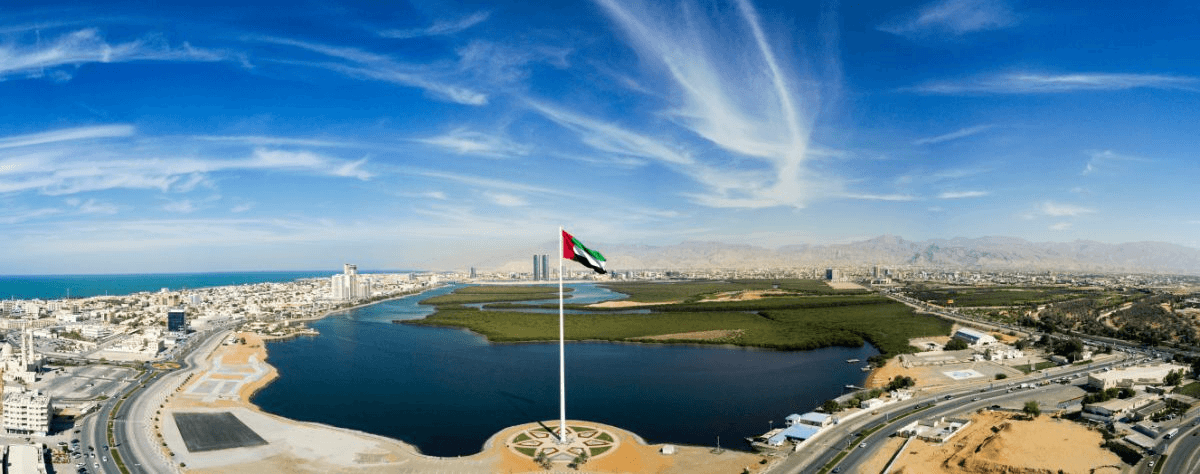
Reem serves as the coordinating office within the RAK Municipality structure. The RIS 2050 annual report establishes governance by assigning implementing entities, performance metrics and reporting cycles. Reem has presented the strategy and project pipeline at investment forums and industry events to attract capital and technical partners.
Early results and reported metrics
Reem and municipal updates cite the following achievements and activity levels so far:
- 4,500+ Barjeel-compliant buildings constructed;
- 400+ buildings retrofitted for higher energy performance;
- industrial energy audits and advisory services rolled out across major industrial users;
- private CO₂ capture plant operational, capturing ~17,000 tonnes CO₂/year.
Reem materials and municipal briefings reiterate that RIS 2050 is designed to secure energy and water supplies while lowering emissions intensity. The strategy documentation names the ruler’s endorsement and multi-agency coordination as elements enabling delivery.
Key programmes
- Utilities: gas reliability, utility-scale renewables, distributed solar.
- Environment: air quality, freshwater protection, biodiversity.
- Climate mitigation: buildings, transport, industry, agriculture.
Funding and private sector role
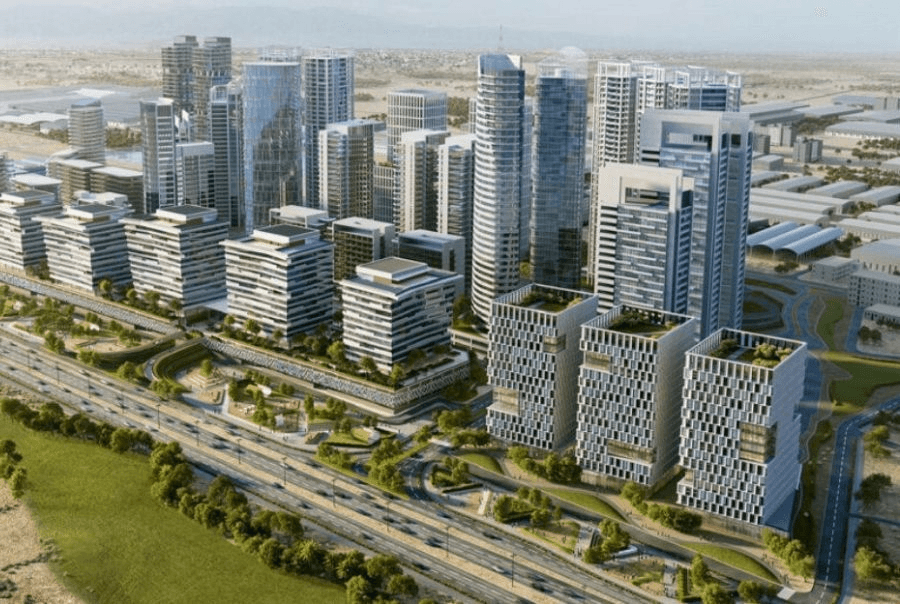
The strategy signals reliance on a mix of public funds, private capital and public-private partnerships. Reem’s outreach includes SME innovation challenges and industry engagement efforts to source technology and project partners for the RIS pipeline.
Reem’s 2025/2026 materials commit to annual reporting of progress against RIS indicators, continued project tenders, and scaled engagement with industrial anchor firms to accelerate decarbonisation actions across RAK’s strategic sectors.