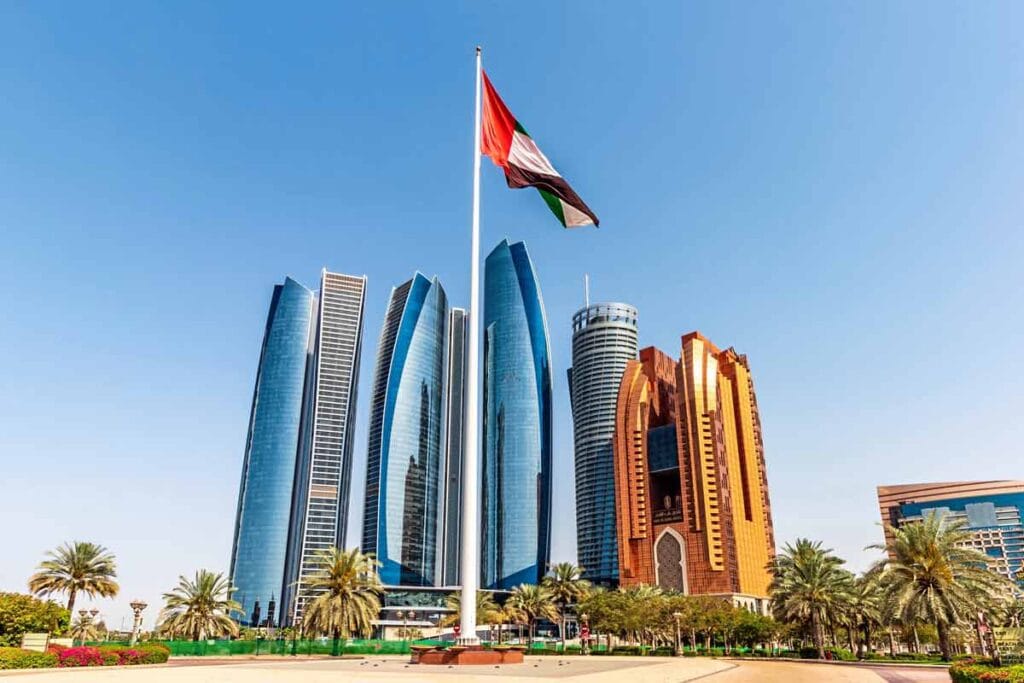
ABU DHABI – There is a distinct shift happening in how Abu Dhabi talks about money. For years, the conversation was dominated by volume—how many billions flowed in last quarter. But an ambitious new roadmap unveiled by the Abu Dhabi Investment Office (ADIO) suggests those days are fading. The emirate is pivoting hard toward what insiders are calling the Abu Dhabi cluster strategy, a plan projected to pump nearly Dh300 billion into the GDP and generate over 110,000 skilled jobs by 2045.
It’s a move that feels less like a simple policy update and more like a maturation of the market. Ahmad Soubra, the Head of Value Creation at ADIO, was blunt about the change. The emirate isn’t just looking for cheques anymore; it’s looking for “depth.” It wants businesses that don’t just rent an office but actually sink roots, evolve, and compound their value right here in the capital.
Table of Contents
Shifting from Volume to Value Creation
Anyone watching the region knows the old playbook: cities competing aggressively for Foreign Direct Investment (FDI) based on who could offer the glossiest incentives. Abu Dhabi seems to be stepping off that treadmill. The mandate has moved to “outcome-based investment,” meaning every dirham is now scrutinized for what it actually does for long-term competitiveness.
“Capital is still essential, but it is the enabler, not the end goal,” Soubra noted.
It’s a nuanced point, but a critical one. Success isn’t a press release about signed MoUs anymore. It’s measured by factories actually running at scale, patents being filed from local R&D centers, and engineers building twenty-year careers.
This dovetails with the Abu Dhabi Industrial Strategy, which has set a steep target for manufacturing alone to hit Dh172 billion by 2031. Backed by $1.7 trillion in sovereign capital, the proposition is clear: come here not just because we have cash, but because we offer a stable, rules-based harbor while the rest of the global economy feels increasingly choppy.
Strategic Clusters Driving Growth
To make this work, ADIO has organized its battle plan around specific, high-growth clusters. The idea is to cluster regulation, infrastructure, and talent together so investors don’t hit administrative walls.


The Priority Sectors
- FIDA (Fintech, Insurance, Digital and Alternative Investments): This isn’t small change; it’s projected to add Dh56 billion to GDP and create 8,000 jobs.
- AGWA (AgriFood Growth and Water Abundance): A necessity given the region’s climate, focusing on food security and water tech.
- SAVI (Smart and Autonomous Vehicles Industry): Betting big on the future of mobility across air, land, and sea.
- HELM (Health, Endurance, Longevity, and Medicine): A push into life sciences that gained real traction post-pandemic.
These aren’t silos. The hope is that these initiatives bleed into the wider economy, giving a leg up to local SMEs and feeding into the Abu Dhabi Local Content program.
Building a Resilient Workforce
Perhaps the most ambitious part of this is the human element. The target of 110,000 skilled jobs feels like a direct answer to the “skills gap” discussion we hear at every business forum. It’s about capability building. Partnerships with institutions like Rabdan Academy are designed to ensure the talent pipeline isn’t just theoretical—that graduates can actually do the work these new sectors demand.
As the emirate strengthens its investment corridors with Asia, Europe, and North America, the message has sharpened. Abu Dhabi doesn’t want to be just a market entry point anymore; it wants to be the global launchpad where complex, long-term business gets done.