Emirates SkyCargo has set out a focused expansion roadmap for 2026, framing the year as a step-change after a milestone 2025. The airline’s official briefing, issued on 5 January 2026, makes the case that Dubai will remain the fulcrum of east–west trade as capacity and capability scale up.
This is not a reactive plan. It reads like a programme designed to lock in the growth the carrier saw last year — while also hedging against the usual swings in global demand.
Table of Contents
What drives the Emirates SkyCargo 2026 strategy?
The 2026 blueprint is straightforward: grow the fleet, deepen the network and modernize operations. That trio underpins decisions made over the past 12 months, and it shapes priorities for the year ahead.
Executives describe the approach as pragmatic. The emphasis is on durability — building capacity that can be flexed, and services that can be specialized when markets demand it.
Fleet expansion and capacity growth
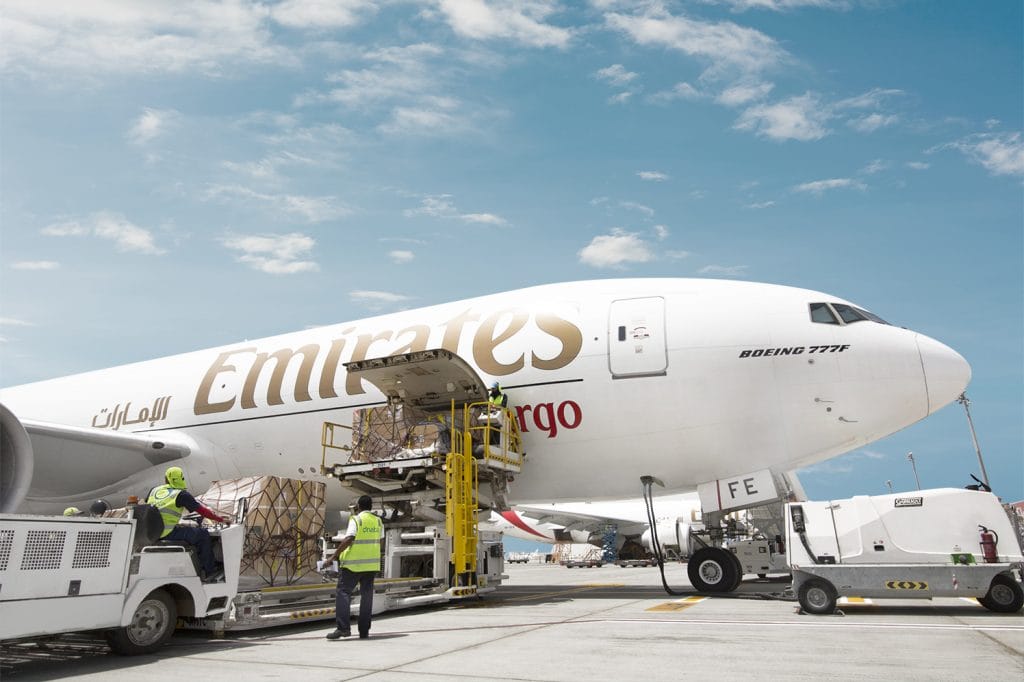
Fleet expansion is the clearest signal of intent in the Emirates SkyCargo expansion plan.
Confirmed items for 2026 include:
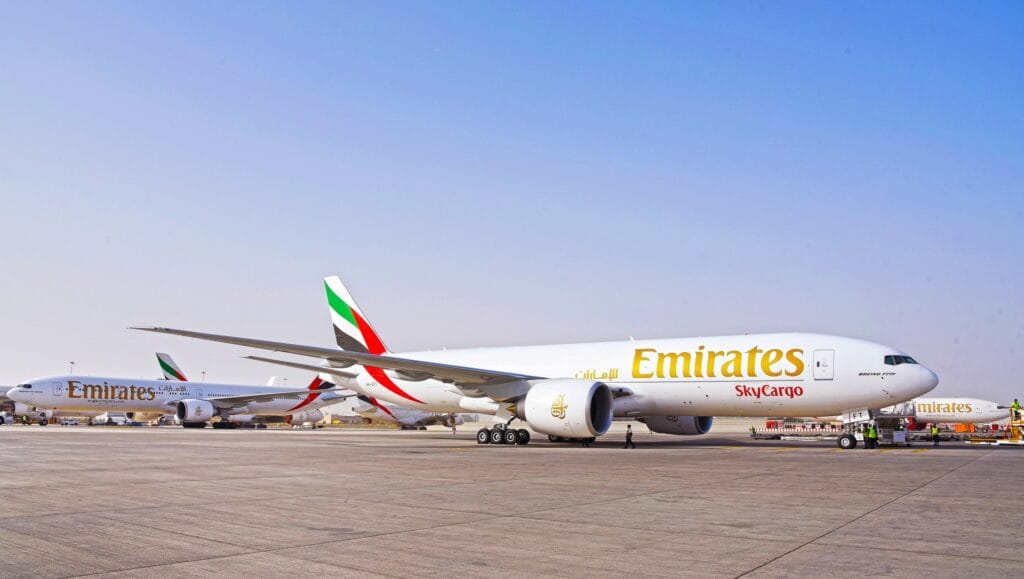
- Delivery of up to 10 Boeing 777 freighters by December 2026, raising main-deck capacity substantially.
- Expansion to at least 21 freighters by year-end, combining new deliveries, conversions and wet-leased aircraft.
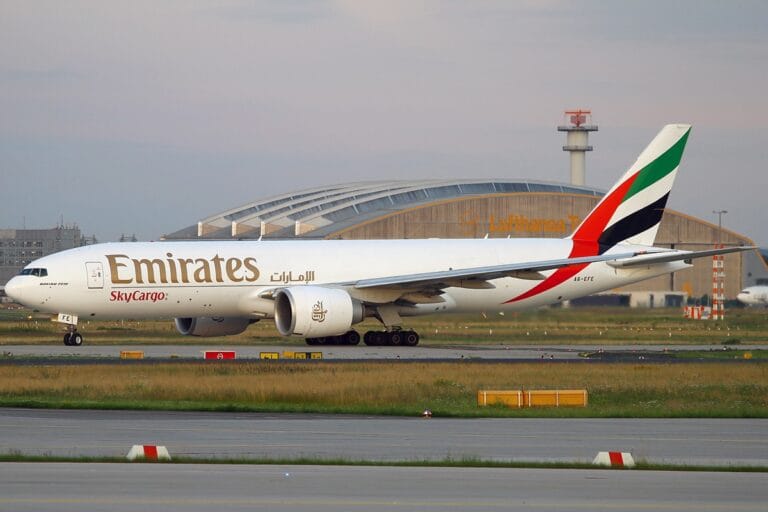
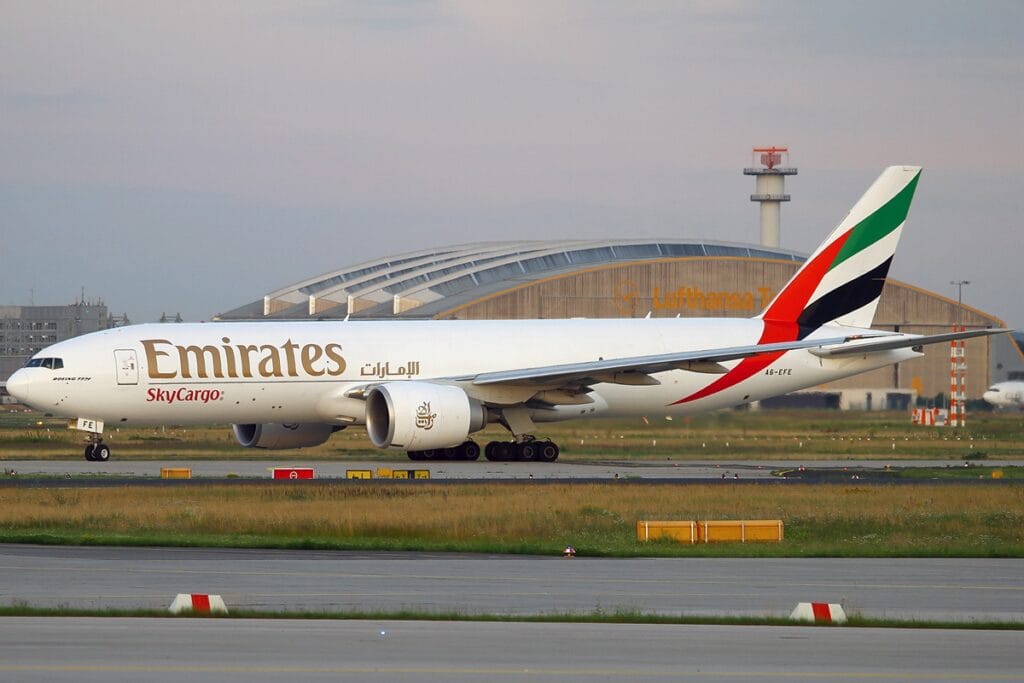
- An active freighter base comprising 11 Boeing 777Fs and five wet-leased 747s as of early 2026.
These additions are aimed at strengthening lanes for pharmaceuticals, perishables, engines and other high-value cargo — sectors that sustained demand during recent market turbulence.
Network and operational footprint
Route growth in 2025 was selective and practical. Emirates SkyCargo added dedicated freighter services to eight destinations — including Copenhagen, Narita, Bangkok and Mumbai — and lifted frequencies to key hubs such as Guangzhou, Shanghai and Johannesburg.
Freighter operations now reach 42 destinations across six continents, with Dubai World Central anchored as the operational hub. That focus keeps hub-and-spoke economics efficient and supports complex, global supply chains.



Market outlook: recovery with caution
The recovery in air freight has settled into a cautious rhythm. Costs and geopolitics still complicate planning. Even so, Emirates points to steady demand in e-commerce, healthcare logistics and specialized manufacturing — areas that are keeping volumes healthy across Asia-Pacific, Africa and the Middle East.
In short, the recovery looks sustainable, but it is not uniform.
Why 2026 matters
Internally, 2026 is framed as a transition year: beyond rebound, toward durable scale. The carrier is pairing capacity moves with operational upgrades to ensure it can meet future demand.
Digital adoption has accelerated — roughly 80% of shipments are now booked digitally — and the airline has introduced instant payment solutions via PayCargo. On the ground, investments include 40 Euro-6 low-emission trucks and the prospect of hydrogen-powered vehicles early in 2026.
The bigger picture
Product innovation is increasingly visible. Emirates Courier Express — launched in 2025 — has handled more than 50,000 door-to-door shipments, while specialized movements such as aircraft engine consignments have doubled.
Viewed together, these moves show Emirates SkyCargo betting that deliberate, practical investment in fleet, network and services will pay off as global supply chains evolve.
Emirates SkyCargo is shifting from recovery to build-out — adding capacity, sharpening services and doubling down on Dubai as a global cargo hub.