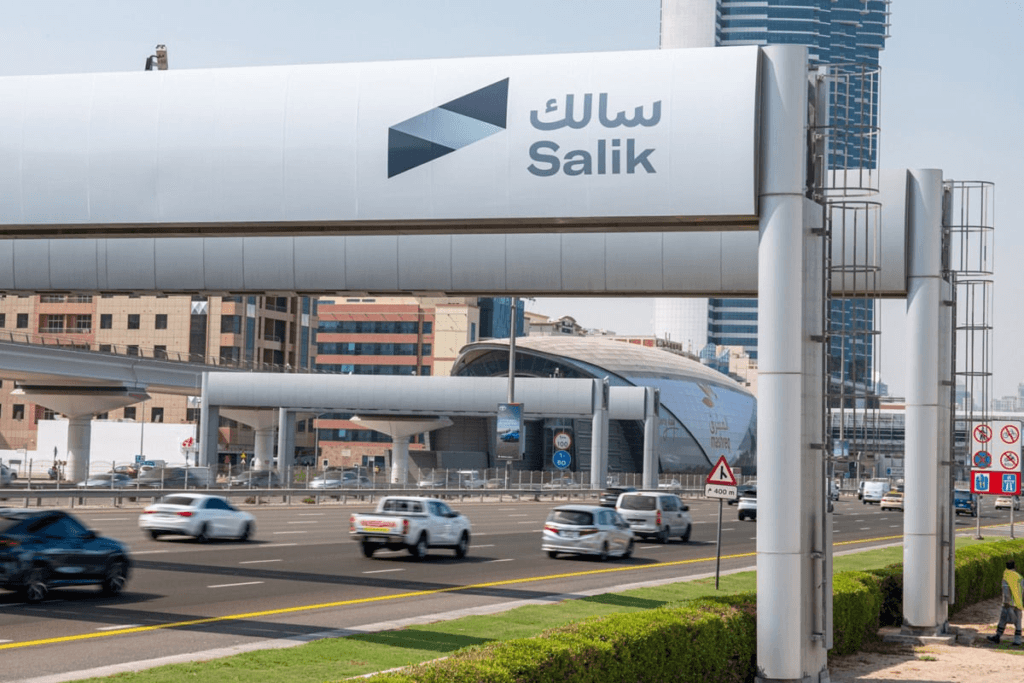
DUBAI: Motorists traversing Dubai’s strategic road networks will incur an increase in transit costs starting Monday, June 1, 2026, as Salik PJSC officially introduces a five per cent Value Added Tax (VAT) on all toll tariffs and tag activation fees. The exclusive emirate-wide toll gate operator confirmed that the tax implementation aligns directly with the UAE’s broader indirect tax framework and corporate legislative updates.
Under the revised pricing structure, standard gate crossings previously priced at AED 4 will now cost drivers AED 4.20. For newly designated peak-hour crossings currently priced at AED 6, the total deduction will rise to AED 6.30 per pass.
The newly applied tax extends beyond daily road usage to encompass administrative services. Vehicle owners purchasing and activating new Salik tags will also see the five per cent levy reflected in the final retail and processing price.
Table of Contents
UAE Toll Tax Update: Salik Adds 5% VAT to Daily Tariffs
This adjustment represents a fundamental shift in how the UAE manages transport-related levies, transitioning Salik fees from out-of-scope services into standard taxable transactions. Since the nationwide introduction of VAT in January 2018, government-linked toll services were largely treated in practice as exempt or outside the tax net.
The transition to a taxable model follows Salik’s recent corporate evolution. After being established as a Public Joint Stock Company (PJSC) under Dubai Law No. 12, the entity now operates as a distinct commercial supplier of access-based road services.
Consequently, providing road network access for consideration places the operator firmly within the parameters of a taxable person making taxable supplies. Dubai’s largest public paid parking provider, Parkin, has similarly announced the application of a five per cent VAT on its parking tariffs, permits, and seasonal cards effective the exact same date.
Breaking Down the New Salik VAT Financial Impact
The daily financial impact on individual motorists remains strictly tied to their frequency of travel across primary corridors, notably Sheikh Zayed Road. Salik has clarified that all VAT amounts collected through its automated Radio-Frequency Identification (RFID) and Automatic Number Plate Recognition (ANPR) systems will be fully remitted to the UAE Federal Tax Authority (FTA).



The company confirmed that the updated fee structure ensures absolute compliance with Federal Decree-Law No. 8 of 2017 and its subsequent amendments. Salik executives reiterated their commitment to advancing the emirate’s smart mobility ecosystem while adhering to overarching federal financial policies.
There will be no retroactive charges levied directly against consumers for historical toll usage. While Salik previously noted a retrospective VAT accounting period extending back to July 2022, public financial disclosures indicate this historic settlement will be resolved internally between Salik and Dubai’s Roads and Transport Authority (RTA).
Corporate Fleet Relief: Claiming VAT on Salik Expenses
For the broader business community, the classification of toll charges as taxable services introduces mandatory changes to corporate accounting protocols. Logistics firms, delivery fleets, and companies providing corporate transport must standardise their expense tracking to isolate the new VAT component.
VAT-registered commercial entities operating within the UAE hold the legal right to recover this input tax on Salik expenses. To offset the newly applied VAT against their output tax liabilities, corporate finance departments must ensure toll expenditures are incurred strictly for business operations rather than personal transit.
Claiming these transport deductions requires businesses to retain robust digital tax records and proper documentation for all registered fleet vehicles. The Federal Tax Authority mandates strict evidence retention for any input tax recovery submitted through quarterly corporate VAT returns.