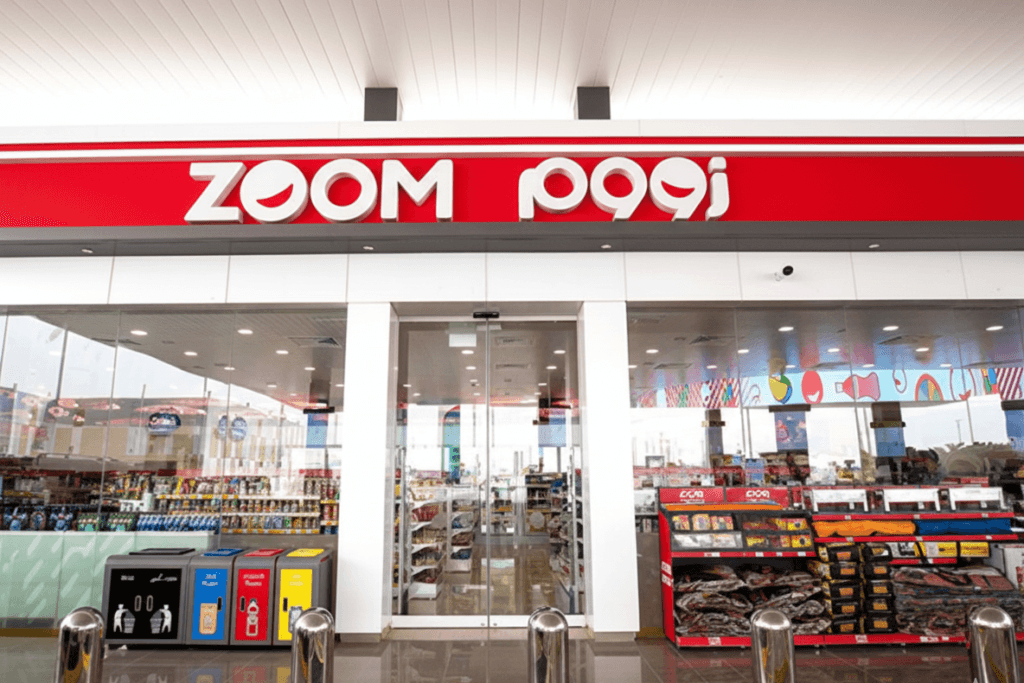
If you commute regularly on the Dubai Metro and ever noticed Zoom Stores , you may have sensed it before you really clocked it. Something felt off during the usual rush-hour routine. At a few major stations, the Zoom outlets — once reliable for a quick coffee, a bottle of water, or a last-minute snack — are simply… gone. No posters. No notices. Just shutters down where there used to be movement.
That quiet disappearance says more than a loud announcement ever could.
Table of Contents
When did this start happening?
The first signs showed up in early December 2025. Regular commuters on the Red Line began swapping notes — one station here, another there — about closed Zoom stores.
By mid-December, the pattern was hard to ignore. Several outlets had fully shut, shelves cleared, branding removed. These didn’t look like temporary pauses.
Zoom, to be clear, hasn’t vanished as a brand. It’s still very visible at petrol stations and in neighborhood locations. But inside metro stations, its presence is thinning out.
Stations where Zoom stores have closed (as of December 2025)
Based on commuter reports and on-site observations:
| Metro Station | Line | Closure Status(Dec 2025) | Notes |
| Deira City Centre | Red Line | Closed | Store fully cleared |
| Al Rigga | Red Line | Closed | No Opening Notice |
| Mall of the Emirates | Red Line | Closed | High Footfall Location |
| Union | Red/Green | Partial Closure | Limited Retail price |
Why are Zoom stores closing at metro stations?
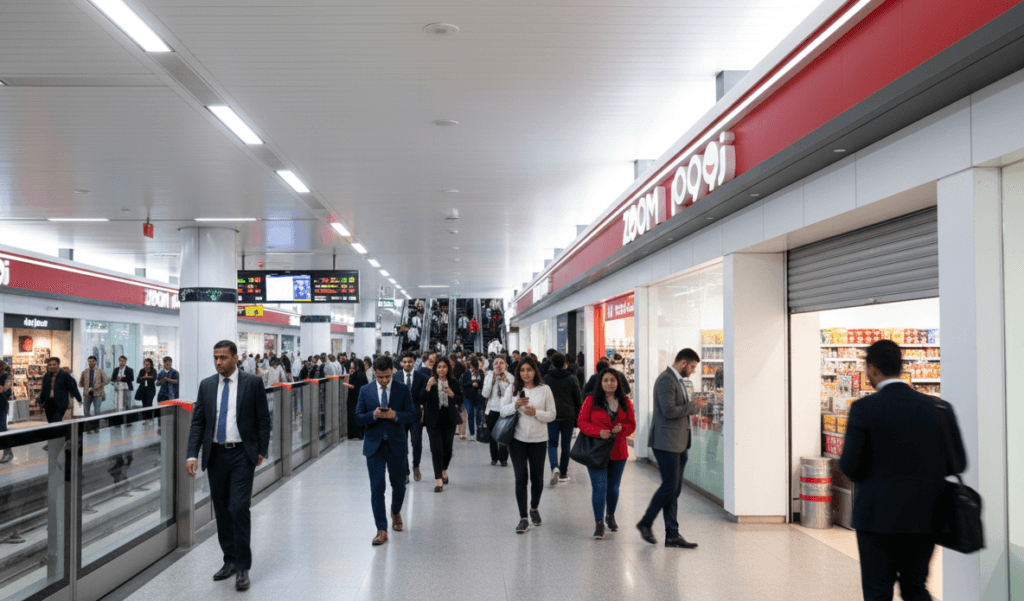
Retail analysts and “station-side” chatter point to a “slow squeeze” from three different directions.
1. Commuter habits have changed — quietly but completely
Dubai’s commuting life doesn’t look the way it did even five years ago. Hybrid work is common now. People plan ahead more. Many walk into stations already holding a coffee ordered through an app or made at home.
That’s where station retail takes a hit. These stores depend on impulse buys. When commuters stop pausing, even briefly, sales slip.
A coffee before boarding used to feel automatic. Now, for a lot of people, it’s already sorted before they leave home.
2. The Maths inside metro stations is tough
Retail space inside metro stations isn’t cheap. Convenience stores survive on volume and speed. If the average spend drops — even a little — the margins start to wobble.
Industry chatter suggests some outlets struggled, especially outside peak hours and on weekends when footfall thins out. High rent plus inconsistent demand is a difficult equation to balance.



3. Zoom appears to be choosing its battles
This doesn’t look like Zoom stepping away from convenience retail. It looks like a recalibration. Petrol stations and residential areas offer longer visits, larger baskets, and steadier demand. Metro stations rely on fast in-and-out purchases — a model that’s under pressure in today’s delivery-first, app-driven routine.
The real change here is strategy, not retreat.
What commuters are saying ?
- For many daily riders, the closures felt abrupt.
- Some only realized when they turned up during the morning rush and found locked shutters. Others shrugged it off, saying it was bound to happen sooner or later.
- That mindset is becoming normal — and retailers are adjusting to it.
One comment you hear often goes something like:
“I used to grab coffee there every morning. Now I just order it before I leave.”
What this means for retail at Dubai Metro stations
This isn’t the end of shopping inside metro stations. But it is a shift in how that shopping works. Retail analysts expect to see more of:
- Smaller, automated kiosks
- App-based pick-up counters
- Smart vending machines for food and drinks
- Short-term pop-ups instead of long leases
What this means is simple: station retail will likely become faster, quieter, and more digital — designed to fit around commuting, not interrupt it.
The bigger picture
Zoom’s metro closures aren’t a failure story. They’re a snapshot of how fast urban habits change in Dubai.
People still want convenience. They just want it earlier, faster, or already waiting for them. Transit spaces will keep evolving to match that reality.
For now, one thing is clear. The predictable metro coffee stop is fading — replaced by something less visible, more efficient, and very much shaped by how people actually move through the city today.