The United Arab Emirates’s labour ministry said on 9 February 2026 it has delivered major reductions in paperwork, in-person visits and processing times across core labour market services by expanding artificial-intelligence tools and integrating digital government data. The ministry said some procedures and customer visits have been eliminated entirely, while work-permit processing times fell by as much as 95%, and several services showed 100% reductions in required steps.
Table of Contents
Results and figures

The ministry’s public statement lists the headline achievements as: a 95% reduction in work-permit processing time; verification time for permit data cut from 10 minutes to under one minute; automatic issuance of establishment work-permit quotas that previously took up to 10 days; and automated completion of millions of transactions via AI agents. The release cites an automated quota engine that issued about 900,000 quotas between February and October 2025.
Service bundles
MoHRE said three integrated service bundles were central to the changes. The Establishment Bundle now issues establishment cards automatically on receipt of trade-licence data from Economic Departments, eliminating customer visits for issuance and updates. The Work Bundle provides a single request flow, a shared platform and one-time data entry; its scope was expanded to include domestic-worker residency visa services, with a typical form’s required fields reduced from 50 to 16. The Emirati Work Bundle in the private sector standardises information across entities and, the ministry said, cuts procedures by 95%, documents by 91% and completion time by 85%.
AI verification and quotas
An AI-powered verification agent now cross-checks Emirates ID, passport, employment contract data and photo quality in real time. The ministry reported that the agent enabled automated completion of over 11 million transactions and reduced audit and data-entry times from minutes to under one minute. The AI quota system issues work-permit quotas to establishments instantly, slashing manual review and reducing human involvement in additional approvals by roughly 56% in the ministry’s account.
Call centre and inspection systems
MoHRE described upgrades to its customer-service operations using AI for proactive call and email routing, automatic email summaries, speech-to-text conversion and automated instant chat replies. The ministry said call-review time fell from 10 minutes to two minutes, saving over 1,000 work hours and sharply lowering related costs. Separately, an AI inspection and safety module flags occupational health and safety issues, auto-generates reports and supports faster decisions on violations.
Wage Protection System and data links
The ministry announced an enhanced Wage Protection System implemented with the Central Bank of the UAE and Al Etihad Payments, plus selected authorised financial institutions. The upgrade creates a real-time direct data link between MoHRE and financial platforms, the statement said, enabling employers to manage salary payments more quickly through integrated digital channels.



Procedural simplifications
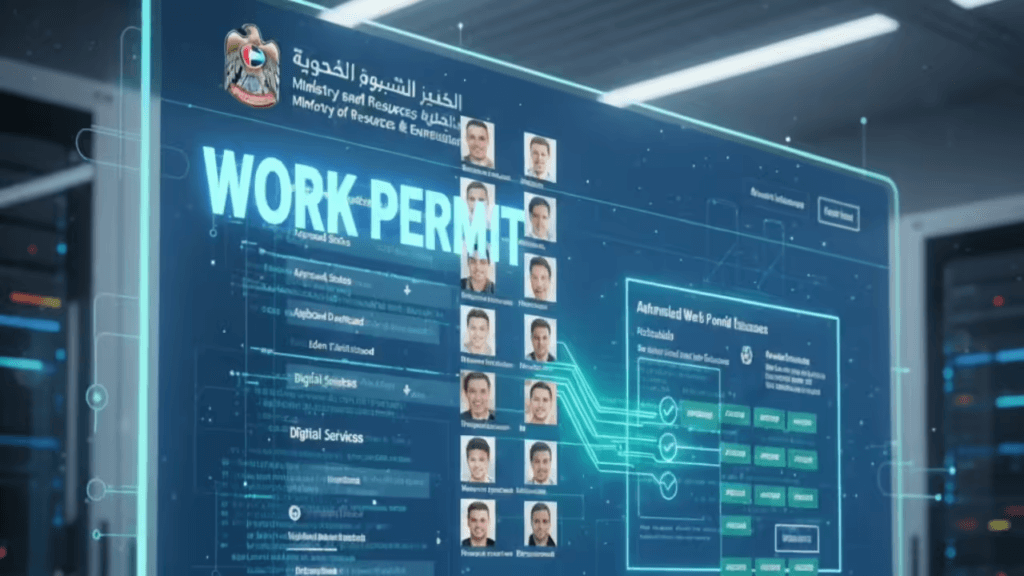
MoHRE listed multiple process-level reductions: work-permit cancellation consolidated into a single procedure with some flows showing zero customer steps; the ability to amend job-offer data after issuance with no complex procedures; new-work-permit issuance for domestic workers with 100% of previous attachments removed for some flows; and reductions in required form fields across numerous transactions (multiple examples cited in the release).
Official comments
Rashid Alsaadi, Acting Assistant Undersecretary for Labour Market Services, said the ministry’s teams achieved the results quickly by prioritising customer needs and applying AI and data integration across services. He invited customers and community members to propose further simplifications through Customer Councils and ministry channels.
Implementation timeline and scope
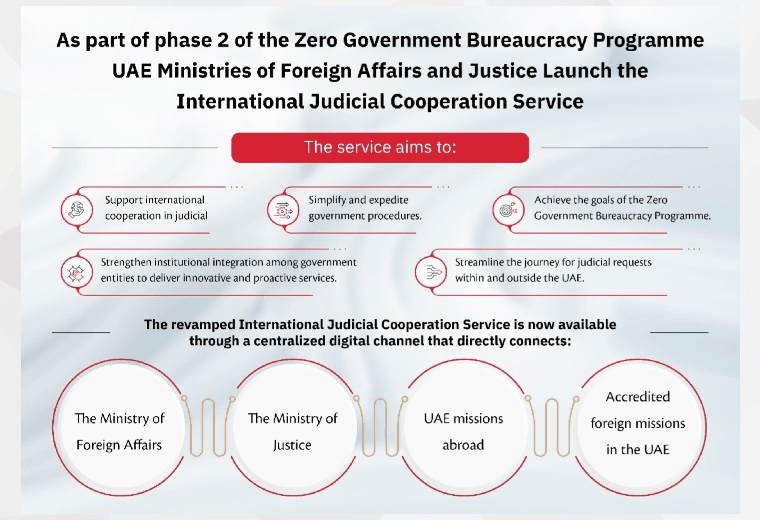
The ministry stated these measures form the second phase of the federal Zero Government Bureaucracy Programme and listed the changes as active results of rollouts carried out through 2025 into early 2026, citing specific programme milestones such as the automated quota activity between February and October 2025. The release describes the work as part of an ongoing programme, with channels open for stakeholder feedback.