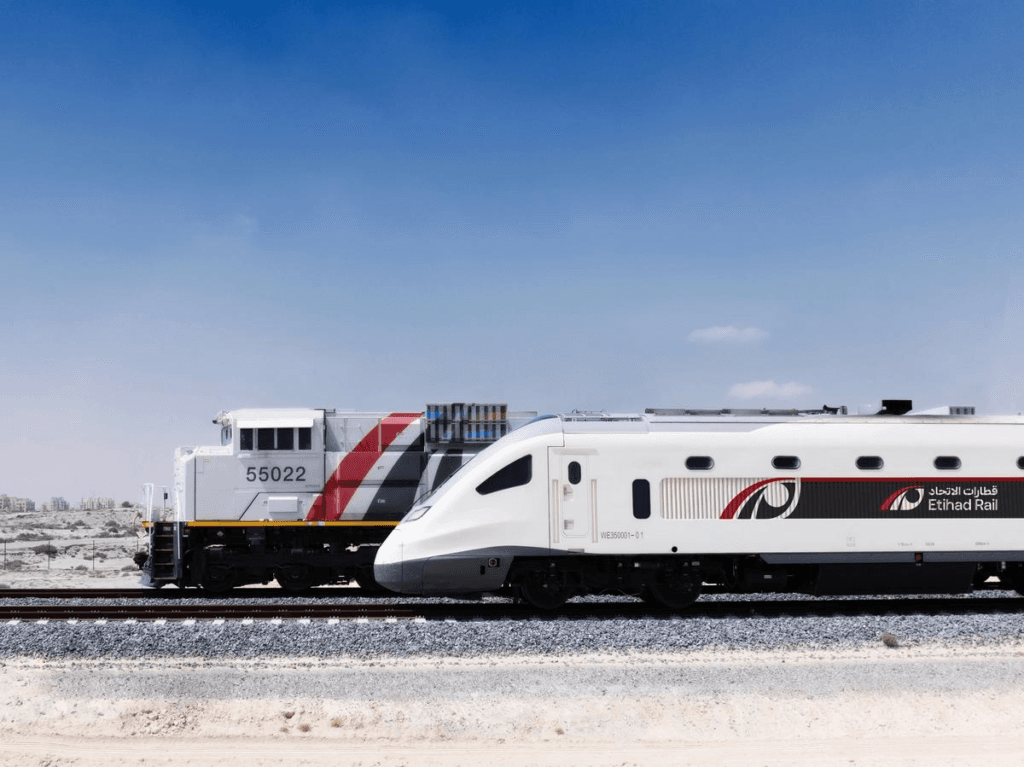
ABU DHABI — Etihad Rail passenger services are set to begin in phased stages from 2026, marking a major shift in inter-emirate travel across the UAE. The national rail network is expected to connect Abu Dhabi, Dubai, Sharjah and Fujairah in its initial phase, with journey times, station access and ticket pricing now among the most closely watched details.
For years, millions of commuters have relied almost exclusively on road transport to travel between the UAE’s largest cities. The launch of passenger services is expected to transform commuting patterns, boost domestic tourism, support economic growth and reduce pressure on some of the country’s busiest highways.
Passenger trains are expected to operate at speeds of up to 200 km/h, cutting the Abu Dhabi–Dubai journey to less than one hour and establishing a transport network government officials view as a cornerstone of the UAE’s long-term infrastructure strategy.
Table of Contents
Etihad Rail passenger services confirmed to begin phased rollout from 2026
The most common question from residents is simple: when will passenger trains actually start running?
Current public information indicates that passenger services will begin in phases from 2026 rather than through a single nationwide launch. No exact opening date has yet been announced.
Public statements and project updates indicate that the first phase will focus on connecting Abu Dhabi, Dubai and Fujairah, before wider expansion across the network. Industry observers believe authorities are deliberately adopting a phased approach to ensure operational reliability before scaling services nationwide.
Unlike metro systems, intercity railways require extensive integration between stations, signalling infrastructure, rolling stock, maintenance facilities and passenger systems, making phased implementation common internationally.
Etihad Rail stations confirmed in Abu Dhabi, Dubai, Sharjah and Fujairah
Station location will be a key factor in passenger adoption. For commuters, usefulness depends not only on train speed but also on how easily they can access stations from residential communities and business districts.
Publicly reported passenger stations include:
Mohammed Bin Zayed City Station, Abu Dhabi
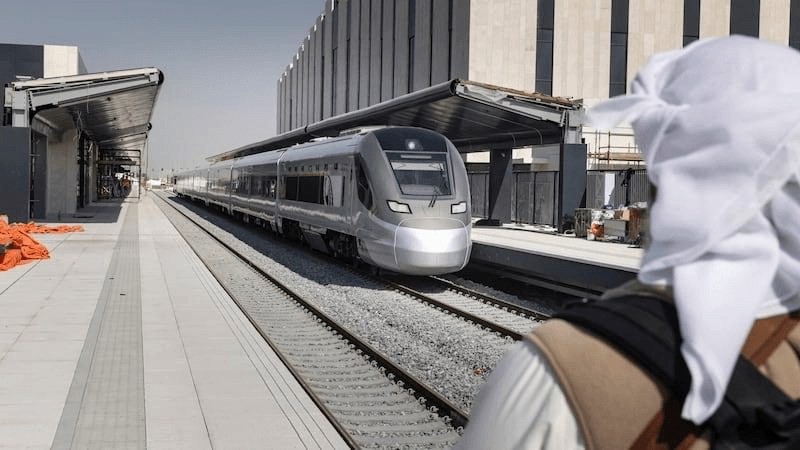
The Abu Dhabi passenger station will be located in Mohammed Bin Zayed City. The location provides access to major residential communities and lies close to strategic highway connections linking Abu Dhabi with Dubai and the Northern Emirates.
Jumeirah Golf Estates Station, Dubai
Dubai’s primary Etihad Rail station is expected to be located within Jumeirah Golf Estates. The location has generated discussion among residents because it sits outside traditional business districts such as Downtown Dubai, Business Bay and DIFC. Transport planners appear to have prioritised connectivity, available land, future development potential, and integration opportunities with Dubai Metro and road networks.
University City Station, Sharjah
Sharjah’s station will be located in University City, an area that already functions as a major educational and residential hub and sits strategically between several rapidly growing communities. For residents currently commuting daily between Sharjah and Dubai, this station could become one of the network’s most important passenger gateways.
Al Hilal Station, Fujairah
The Fujairah station will provide the UAE’s east coast with direct rail connectivity to major population centres for the first time. The station is expected to support tourism, logistics activity and business travel between Fujairah and the rest of the country.
Public reporting also suggests that the wider passenger network could ultimately include as many as 11 stations across the UAE, although the complete list has not yet been officially disclosed.
What are the 11 cities and regions connected by Etihad Rail?
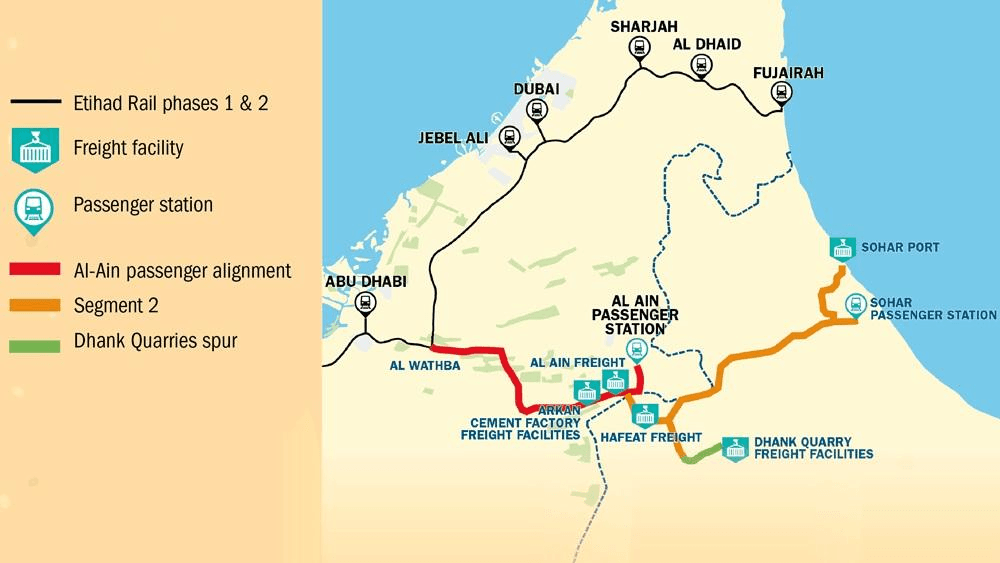
The complete national passenger network is reported to eventually connect 11 strategic zones:
- Mohammed Bin Zayed City (Abu Dhabi)
- Jumeirah Golf Estates (Dubai)
- University City (Sharjah)
- Al Hilal (Fujairah)
- Al Sila
- Al Dhannah
- Al Mirfa
- Madinat Zayed
- Mezaira’a
- Al Faya
- Al Dhaid
Abu Dhabi to Dubai train journey expected to take approximately 57 minutes
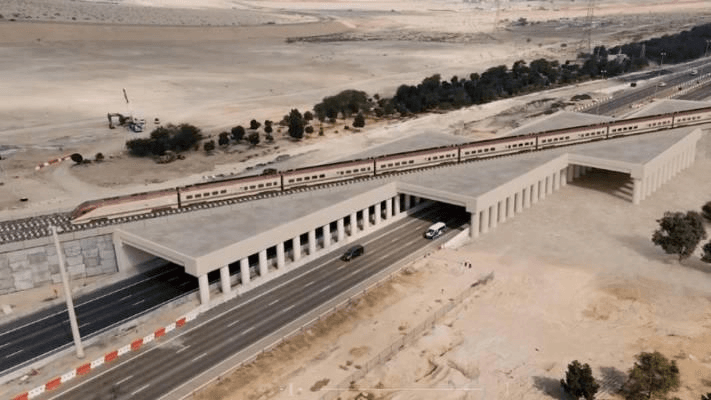
Travel time remains the most important metric for residents considering switching from cars to trains.
Current public estimates indicate that Etihad Rail passenger trains will complete the journey between Abu Dhabi and Dubai in approximately 50 to 57 minutes. That compares favourably with road journeys which frequently exceed 90 minutes during peak traffic periods.
Passenger trains are expected to operate at speeds of up to 200 km/h, making them among the fastest forms of public transport in the country.
Reported projected travel times include:
| Route | Estimated Journey Time |
|---|---|
| Abu Dhabi to Dubai | 50–57 minutes |
| Abu Dhabi to Fujairah | Approximately 105 minutes |
| Dubai to Fujairah | Approximately 60–69 minutes |
| Abu Dhabi to Sohar (future Oman link) | Approximately 1 hour 40 minutes* |
* Future route estimates remain subject to official confirmation.
The Abu Dhabi–Dubai corridor is expected to become the busiest route on the network because of the large number of professionals travelling between the two emirates each day.
Etihad Rail ticket prices remain unannounced as residents await fare details
Ticket prices are currently among the most searched Etihad Rail topics across Google, Reddit and social media platforms.
At present, Etihad Rail has not officially announced passenger fares. Several market estimates circulating online suggest standard fares could range between AED 20 and AED 40 per journey. However, these figures remain speculative and have not been confirmed by the railway operator.
Industry analysts expect pricing to remain competitive with:
- Intercity bus services
- Fuel costs
- Vehicle maintenance expenses
- Salik toll charges
- Parking fees
A competitively priced rail service could prove particularly attractive to daily commuters travelling between Abu Dhabi, Dubai and Sharjah.
Etihad Rail booking system expected to be fully digital
Ticket sales are expected to follow a digital-first model similar to international passenger rail networks.
Passengers are expected to be able to purchase tickets through:
- Official Etihad Rail website
- Dedicated mobile application
- Self-service kiosks
- Station ticket counters
The railway operator has confirmed that a dedicated app is planned for ticket sales, seat reservations and digital boarding passes. However, the final app name has not yet been publicly released.
Industry observers expect ticketing functionality to resemble modern airline and high-speed rail platforms, allowing passengers to select seats, manage bookings and access travel updates directly from mobile devices.
Dubai Metro integration could become critical to passenger adoption
One of the most frequently asked commuter questions concerns connectivity beyond the railway stations themselves.
The reported location of the Dubai station at Jumeirah Golf Estates has intensified interest in how passengers will complete journeys into central Dubai. The station’s proximity to Dubai Metro infrastructure is expected to play a significant role in passenger convenience.
Although detailed multimodal integration plans have not yet been fully announced, transport analysts expect coordination between rail services, Metro stations, buses and taxi networks. The success of international rail systems often depends as much on first-mile and last-mile connectivity as on train speed itself.
Nol card compatibility remains unclear ahead of passenger launch
Many Dubai residents are asking whether Nol cards will be accepted for Etihad Rail journeys.
At present, no official announcement has confirmed Nol card integration. Given Dubai’s extensive public transport ecosystem, transport experts believe some level of interoperability may eventually emerge, but there is currently no formal confirmation regarding fare payment methods beyond the expected dedicated ticketing platform.
Until Etihad Rail releases its final ticketing framework, residents should assume journeys will be purchased through the railway’s dedicated ticketing platform.
Abu Dhabi–Dubai commuting could become one of the biggest beneficiaries
For thousands of professionals living in one emirate and working in another, the railway could fundamentally change commuting economics.
A 57-minute train journey has the potential to reduce reliance on private vehicles while eliminating concerns around fuel expenditure, parking charges, Salik fees and traffic congestion. Employers may also benefit from more predictable employee travel times.



Property consultants have already noted growing interest in residential communities located near future station locations, particularly in Mohammed Bin Zayed City, Jumeirah Golf Estates and University City.
UAE high-speed rail project differs from Etihad Rail passenger network
Public confusion frequently arises between Etihad Rail and the recently announced Abu Dhabi–Dubai high-speed rail project. Although both involve rail transport, they are separate initiatives.
The Etihad Rail passenger network is designed as a national intercity railway serving multiple cities and stations. The separate high-speed rail project is expected to operate at significantly higher speeds and is intended to connect Abu Dhabi and Dubai in approximately 30 minutes.
The two projects serve different transport objectives and are expected to complement rather than replace each other.
Etihad Rail trains will offer Economy, Family and First Class cabins
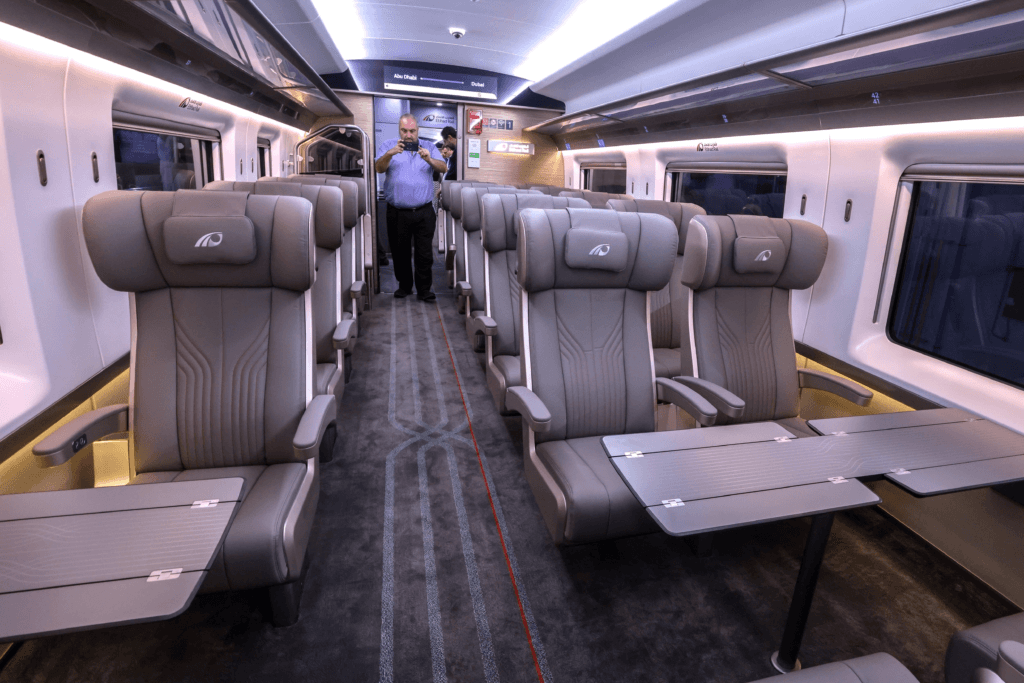
As passenger rail services move closer to launch, one of the most frequently searched questions concerns the travel experience onboard.
Publicly available information indicates that Etihad Rail passenger services will offer three primary travel classes: Economy, Family and First Class. The introduction of dedicated Family Class cabins is expected to distinguish the service from many international railway systems, reflecting the UAE’s family-oriented travel culture and growing demand for domestic leisure travel.
Economy Class expected to serve daily commuters
Economy Class is expected to become the most widely used section of the train, particularly among daily commuters travelling between Abu Dhabi, Dubai and Sharjah.
Family Class designed for leisure travellers
Family Class is expected to cater primarily to parents travelling with children during weekends, school holidays and public holidays. The dedicated family section is likely to provide a quieter and more convenient environment for households travelling between emirates for tourism, shopping or family visits.
First Class targets premium travellers
First Class cabins are expected to provide a significantly enhanced travel experience, targeting business executives, corporate travellers and passengers seeking greater privacy. Premium seating, additional legroom, lounge access and upgraded hospitality services are widely anticipated, although the final service specification has not yet been publicly released.
Etihad Rail passenger carriages draw inspiration from luxury European rail travel
Public reporting indicates that Spanish train manufacturer CAF has been selected to supply passenger rolling stock for the network. The passenger experience is expected to incorporate design influences associated with luxury rail travel, including premium materials, spacious interiors and enhanced passenger comfort.
Industry reports have linked Italian luxury hospitality group Arsenale to aspects of the wider passenger experience concept, leading to comparisons with the iconic Orient Express style of travel. Beyond the trains themselves, station designs are expected to feature premium waiting areas, modern passenger facilities and business lounge environments.
Onboard amenities: Wi‑Fi, charging ports and luggage storage
Reliable internet connectivity has emerged as one of the highest-priority requirements among UAE commuters. Current reporting indicates that passengers can expect onboard Wi‑Fi throughout the train network.
In addition, each seat is expected to feature:
- USB charging ports
- Individual power outlets
- Personal tray tables
- Digital passenger information systems
Passenger luggage policies have become another major discussion point. Current information suggests that carriages will include:
- Overhead luggage racks
- Under-seat storage
- Wall-mounted luggage hooks
- Retractable tray tables
These facilities are expected to accommodate both short-distance commuters and long-distance leisure travellers.
Rail & Fly programme could transform airport connectivity
One of the most ambitious aspects of the future passenger network involves integration with Etihad Airways through the planned Rail & Fly programme.
The initiative is expected to allow passengers to purchase combined rail-and-flight tickets through a single booking journey. Train schedules are expected to align with flight arrival and departure times, reducing transfer friction for international travellers.
Current reporting also indicates that station-based luggage processing may form part of the ecosystem, allowing passengers to complete portions of the airport check-in process before reaching the terminal.
Each passenger train expected to carry approximately 400 travellers
Current reporting suggests that individual passenger trains will accommodate approximately 400 passengers. Some reports indicate capacity figures ranging between 365 and 400 passengers depending on train configuration and carriage mix.
The final operating model will ultimately depend on:
- Train frequency
- Peak-hour scheduling
- Station demand
- Network expansion phases
Fujairah journeys could become dramatically faster
Current public estimates indicate:
- Abu Dhabi to Fujairah: approximately 105 minutes
- Dubai to Fujairah: approximately 60 to 69 minutes
For comparison, road journeys between Abu Dhabi and Fujairah frequently exceed three hours depending on traffic and route selection. Tourism operators expect the railway to stimulate weekend travel to Fujairah’s beaches, resorts and mountain destinations.
Oman rail connection remains part of long-term expansion plans
Current public reporting indicates that future network expansion may extend through Hatta towards Sohar Port in Oman. This route is not expected to form part of the initial 2026 passenger rollout but remains an important long-term objective within broader regional rail integration plans.
The Oman connection forms part of wider ambitions to create a seamless railway network linking Gulf countries through the GCC Railway programme.
Sharjah commuters could become among the biggest beneficiaries
Few resident groups may benefit more directly from Etihad Rail than commuters living in Sharjah and working in Dubai. Traffic congestion between the two emirates remains one of the UAE’s most persistent transport challenges.
The University City station is expected to provide Sharjah residents with direct access to the national passenger network. If journey times and ticket pricing prove attractive, transport analysts believe significant numbers of commuters could shift from road travel to rail services.
What remains unconfirmed ahead of launch
Several key details remain pending official confirmation:
- Exact launch date and timetable
- Official ticket fares
- Final app name
- Number of daily services and frequency
- Food and catering service model
- Pet, bicycle and oversized luggage policies
- Refund, exchange and cancellation rules
- Nol card compatibility
- Monthly or season ticket options
- Detailed station specifications and parking capacity
Until Etihad Rail publishes these details, residents should treat all online estimates as speculation.
FAQs – Etihad Rail UAE 2026
When will Etihad Rail passenger service start?
Passenger services are expected to begin in phased stages from 2026, with the first phase connecting Abu Dhabi, Dubai and Fujairah.
What are the Etihad Rail passenger station locations?
The first four confirmed stations are Mohammed Bin Zayed City (Abu Dhabi), Jumeirah Golf Estates (Dubai), University City (Sharjah) and Al Hilal (Fujairah).
How long is the train journey from Abu Dhabi to Dubai?
Trains running up to 200 km/h are expected to complete the Abu Dhabi to Dubai journey in approximately 50 to 57 minutes.
What is the Etihad Rail ticket price?
Official fares are pending. Market estimates suggest standard fares could range between AED 20 and AED 40, but these figures are not confirmed.
How do I book Etihad Rail tickets?
Ticketing is expected to be digital-first, available via a dedicated mobile app, the official website and self-service kiosks at stations. The app name has not yet been released.
What classes of travel are available?
Trains will offer Economy, Family and First Class options.
Will Etihad Rail connect to Oman?
Future phases plan to connect the network to Sohar Port in Oman via Hatta, but this is not part of the initial 2026 launch.