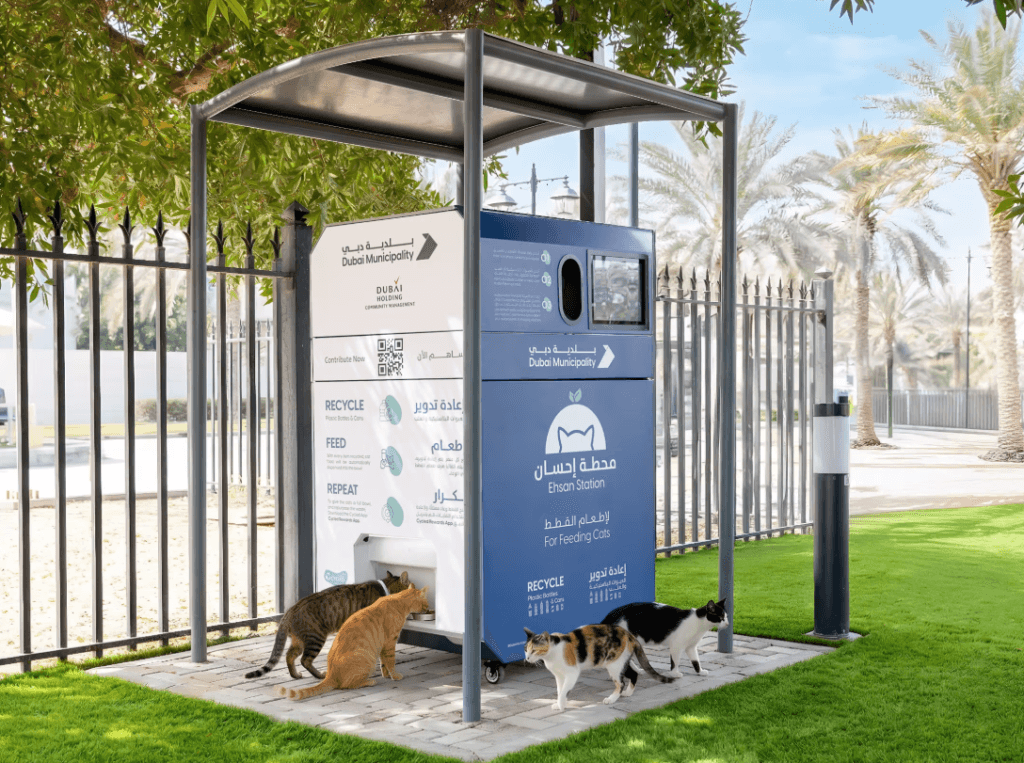
Dubai Municipality has launched the Ehsan Stations programme, installing smart, AI-driven feeding kiosks to provide organised food access for stray animals across the emirate. The pilot includes 12 units sited in parks and Dubai Holding facilities as officials stress animal welfare and public hygiene priorities.
Table of Contents
Programme rollout and locations
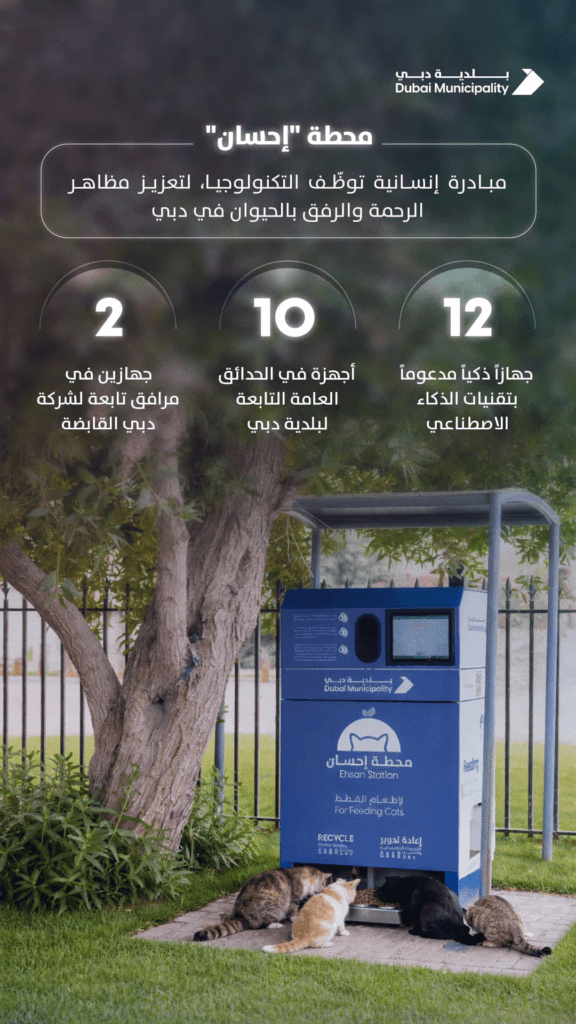
Dubai Municipality confirmed the pilot deployment comprises 12 smart feeding stations. Ten units have been placed in public parks and two units in premises operated by Dubai Holding. The municipality said the rollout will be monitored during the trial phase to assess performance and plan any wider installation across the city.
Technology and operation
The Ehsan Stations use an AI-based detection and dispensing system that identifies animals approaching the unit and automatically releases measured portions of food. Each kiosk records usage data and animal-presence patterns, enabling municipal teams to analyse feeding trends and adjust servicing schedules. Officials described the system as aimed at reducing uncontrolled feeding in public places and minimising waste and pest attraction.
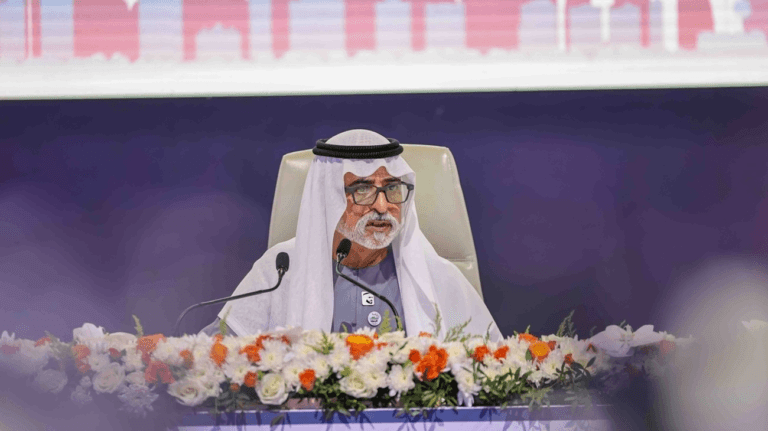
Dr. Naseem Mohammed Rafee, Acting CEO of the Environment, Health and Safety Agency at Dubai Municipality, said: “The launch of ‘Ehsan Stations’ for feeding stray animals, including cats and others, reflects Dubai Municipality’s commitment to promoting humane and civilised values across the emirate, foremost among them compassion and animal welfare. The initiative also supports efforts to preserve ecological balance and advance sustainable practices that reinforce Dubai’s position as one of the world’s most attractive, progressive, and liveable cities. Through these stations, Dubai Municipality is introducing an innovative approach that combines provision of food with more effective management of stray animal populations, while also addressing random feeding practices that can lead to environmental, health, and community-related challenges.”
Local design and production
Dubai Municipality stated the feeding stations were designed and manufactured in the UAE. The units incorporate solar-ready sheltering and are engineered for outdoor use in park environments, the authority said. The local design, the municipality added, allows easier maintenance and faster adaptation based on data gathered during the pilot.
Integration with existing animal-welfare work
Officials clarified that Ehsan Stations complement, rather than replace, existing municipal programmes such as Trap-Neuter-Return (TNR) and Trap-Neuter-Vaccinate-Return (TNVR). Stray animals captured for sterilisation and vaccination will continue to receive veterinary care, and temporary shelters remain operational for animals requiring treatment or rehoming.



Alongside the launch, Dubai Municipality reiterated guidance to residents on responsible pet ownership and avoiding abandonment. The authority asked the public to report animal-welfare concerns through the municipal hotline and official channels so teams can respond and coordinate with the Ehsan Stations programme where relevant.
Pilot monitoring and evaluation
Municipality teams will monitor station usage, animal interaction data, and the effect on surrounding public spaces during the pilot. The collected metrics will inform adjustments to dispensing algorithms, replenishment cycles and potential scale-up decisions. Media updates and official reports are expected as the trial progresses.