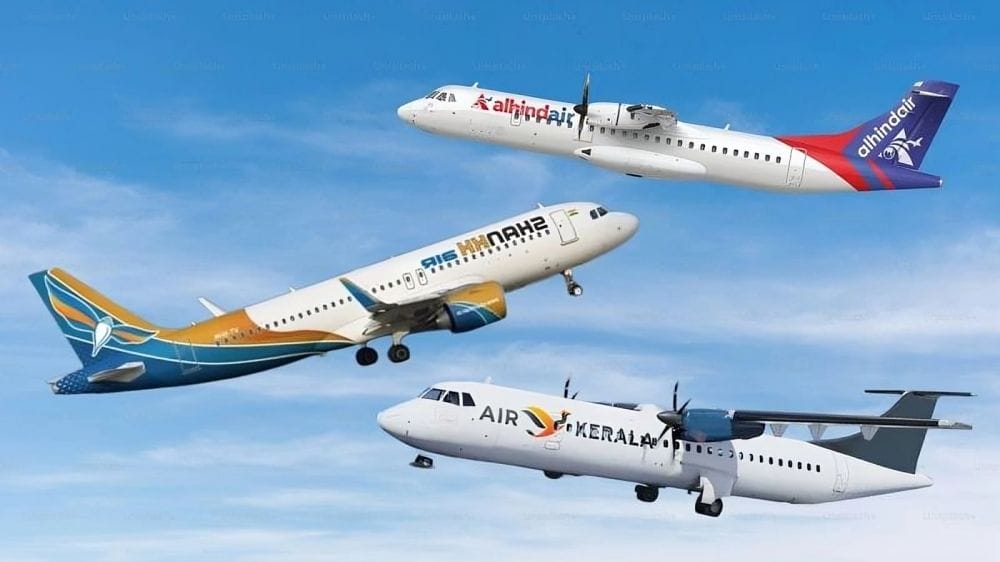
DUBAI — India’s Civil Aviation Ministry granted initial approvals to three new airlines this week, a regulatory push designed to shatter the market dominance of IndiGo following a month of mass cancellations. The move clears the runway for Al Hind Air, Shankh Air, and FlyExpress to launch operations, potentially forcing a correction in skyrocketing airfares on the UAE-India sector.
Table of Contents
Breaking the Duopoly
The timing is sharp.
Approvals for the new carriers arrived just weeks after market leader IndiGo cancelled 4,500 flights, stranding thousands of passengers and triggering a wave of public anger. IndiGo currently commands 65% of India’s domestic market, while the Air India Group controls roughly 27%. This near-monopoly allows two conglomerates to dictate prices for 92% of all flyers; the government wants that to end.
Civil Aviation Minister Ram Mohan Naidu confirmed the issuance of No Objection Certificates (NOCs) on Tuesday.
“It has been the endeavour of the ministry to encourage more airlines,” Naidu said. “Pleased to have met teams from new airlines aspiring to take wings in Indian skies.”
The New Players: Who Are They?
While Shankh Air and FlyExpress will focus on regional Indian connectivity, Al Hind Air poses the most direct interest for the millions of Indian expatriates in the Gulf.
Backed by the Kerala-based Alhind Group—a travel giant with a turnover of ₹20,000 crore ($2.3 billion)—the airline is financially robust. Unlike typical startups that scramble for capital, Al Hind already generates 60% of its ticketing revenue from the Gulf sector. They know the route; now they want to fly it.
New Entrants at a Glance:
| Airline | Base/Hub | Primary Focus | Expected Launch |
| Al Hind Air | Kochi (CIAL) | South India & Gulf (UAE/Saudi) | Q1 2026 |
| Shankh Air | Noida/Lucknow | Full-service (Delhi-UP Corridor) | 2026 |
| FlyExpress | To be decided | Regional Connectivity | To be decided |
Why this matters to UAE travelers
The entry of new Indian airlines UAE routes could increase seat supply on high-demand corridors. Travel agents cautioned, though, that real price effects depend on routes, frequencies and slot access. In short: approvals are welcome, but flights must start before fares change materially.
Industry views
- Galadari International Travel said sectors, frequency and destination lists are not yet public. Clarity will come once airlines disclose schedules.
- Demand to Mumbai, Bengaluru and South India remains high.
“Prices could be reduced when more seats are available,” said Subair Thekepurathvalappil of Wisefox Tourism
Al Hind’s Strategy: Lower Fares for Expats
Al Hind Air plans to commence operations with three ATR-72 turboprop aircraft, targeting regional routes connecting Bengaluru, Thiruvananthapuram, and Chennai. But their sights are set on the Middle East.
Under Indian regulations, a carrier must deploy 20 aircraft domestically before flying international routes. An Al Hind spokesperson confirmed to reporters that the airline intends to aggressively scale its fleet to meet this requirement, aiming to deploy Airbus A320s to Dubai, Riyadh, and Doha shortly after its domestic debut.



This matters because of the price cap.
Ticket prices between the UAE and Kerala currently surge past Dh3,000 during school breaks and festivals. By bundling flights with their existing visa and holiday packages, Al Hind aims to undercut legacy carriers.
Shankh Air and FlyExpress
Shankh Air, led by Chairman Sharvan Kumar Vishwakarma, will operate as a full-service carrier. It will be the first scheduled airline to launch from the state of Uttar Pradesh, focusing on high-demand routes connecting Lucknow and Noida to Mumbai.
FlyExpress remains the wildcard. The startup received its NOC alongside Al Hind but has yet to disclose its operational roadmap or fleet details.
What Happens Next?
An NOC is only the first step.
The three airlines must now secure Air Operator Certificates (AOC) from the Directorate General of Civil Aviation (DGCA) to prove their technical competence. While the government is fast-tracking approvals to stabilise the sector, the first commercial flights from these newcomers likely won’t take off until early 2026.
Until then, travellers remain at the mercy of the current duopoly.