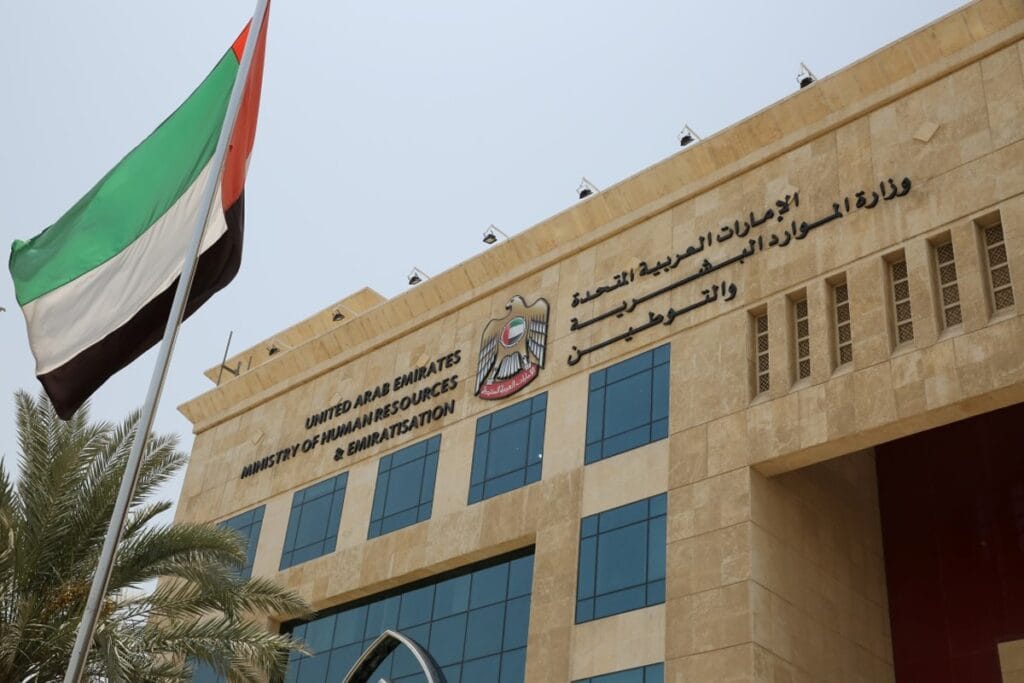
DUBAI: The Ministry of Human Resources and Emiratisation has brought Ministerial Resolution No. 340 of 2026 on the Wage Protection System into effect, introducing a fixed monthly wage payment deadline and a gradual enforcement process that gives private sector establishments time to rectify compliance before stricter measures are applied.
Payroll processing activity surged more than 151 per cent on 1 June as companies adjusted to the new requirements.
Table of Contents
MOHRE Wage Protection System Sets Fixed Wage Payment Deadline
Under the updated rules, wages for the previous Gregorian month must be paid no later than the first day of each Gregorian month. Any payment after this date is classified as delayed.
All transfers must go through the Wage Protection System or MOHRE-approved channels, with employers required to provide proof of payment. The resolution removes previous flexibility linked to employment contracts or grace periods.
Gradual Approach Allows Employers Time to Rectify Compliance
The decision adopts a measured, gradual approach centred on early intervention. Electronic monitoring and notifications begin shortly after the due date, giving establishments sufficient opportunity to address delays and improve their compliance status before administrative action is taken.
This framework supports preventive compliance, reduces the risk of major disruptions to business operations and protects employment relationships, particularly in sectors with large workforces.
Core WPS Employer Obligations UAE Under the New Rules
Private sector establishments must ensure that at least 85 per cent of total wages due are transferred on time, accounting for any lawful deductions. Employers remain fully accountable even when payroll functions are delegated to third parties.
Accurate record-keeping, timely response to MOHRE notifications and alignment of payroll systems with the fixed 1st-of-the-month deadline are now essential obligations.



Escalation Process and How to Rectify Delayed Wages
Non-compliance triggers a structured sequence of measures. These begin with electronic alerts and progress, if unresolved, to suspension of new work permits, administrative fines, company category downgrades, automatic labour disputes and, in serious cases, broader permit suspensions, asset attachment and legal referral.
Employers who receive notifications are encouraged to act quickly within the approved timelines to rectify their status and avoid escalation.
Action Steps for UAE Businesses to Meet WPS Requirements
Companies should review payroll calendars immediately, confirm that all wage payments are processed through approved WPS channels and brief HR and finance teams on the notification and rectification procedures.
Regular monitoring of MOHRE communications and prompt correction of any shortfalls will help establishments maintain strong compliance standing under the revised framework.
The Wage Protection System continues to handle more than AED 37 billion in monthly wage transfers, highlighting its central importance to labour market stability and worker protection across the UAE.