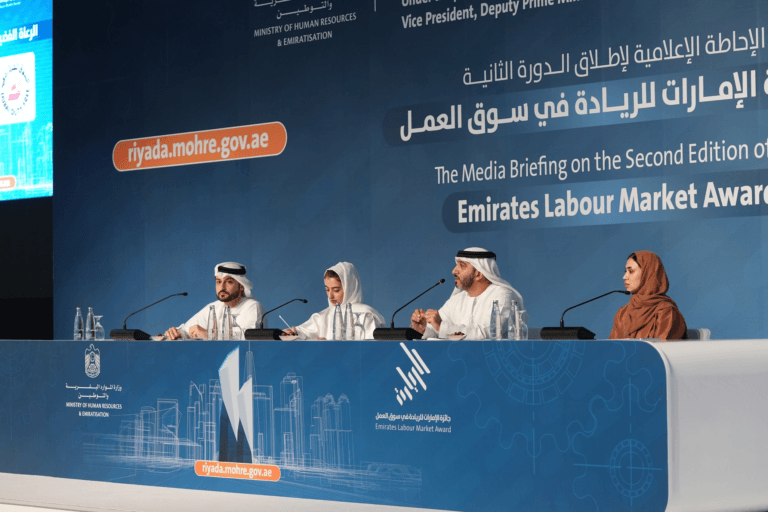
DUBAI, United Arab Emirates — Low-income workers across the UAE are increasingly keeping their salaries in digital accounts instead of withdrawing cash immediately — a significant behavioural shift that signals deeper trust in payroll technology as the country heads into 2026.
The change marks a departure from a long-standing pattern in which workers, particularly those earning under AED 5,000 a month, would withdraw their full salary within hours of payday. Today, digital wage platforms are no longer seen as temporary transit points for cash, but as everyday financial tools.₹
Table of Contents
Beyond Compliance
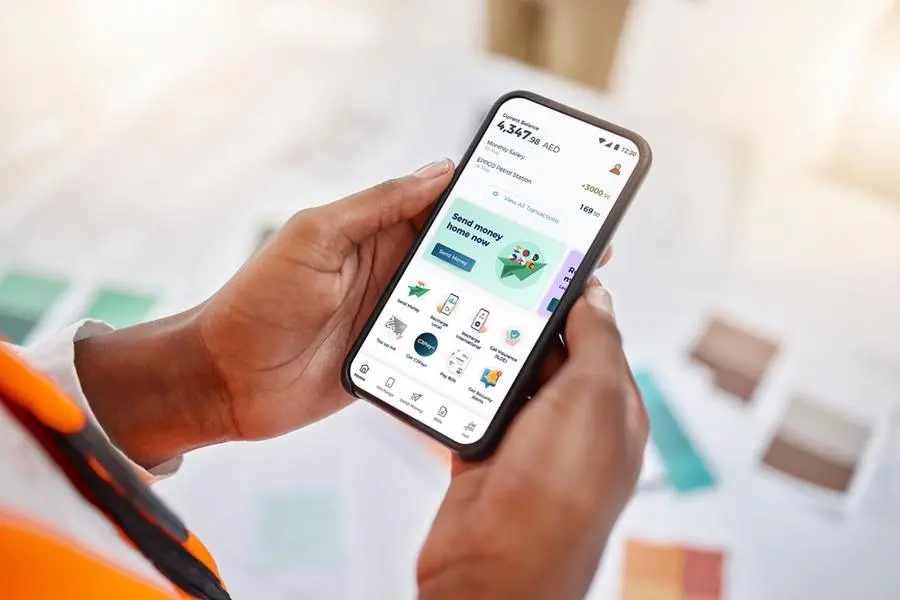
The shift moves financial inclusion well beyond the government’s mandatory Wage Protection System (WPS), transforming basic payroll apps into active tools for remittances and bill payments. It signals rising trust among a demographic that previously treated bank accounts merely as temporary transit points for hard currency.
Data indicates a break from the “withdraw-all” pattern that defined the market for a decade.
Salary-linked platforms—once simple conduits for pay—now function as primary financial hubs for workers earning under AED 5,000 ($1,360) monthly. Users manage mobile top-ups, track spending, and execute international transfers directly through multi-lingual interfaces; they are keeping money digital.
- Retention Rates: Workers are leaving funds in accounts longer than ever before.
- Usage Spikes: Digital remittances are replacing physical exchange house visits.
- Dispute Drop: Employers report significantly fewer questions regarding payroll delays.
Corporate Impact
The change is palpable on the ground.
Employers attribute a drop in payroll disputes to increased worker visibility over their own funds. The transparency offered by real-time apps has reduced the friction often associated with manual cash handling or opaque transfer processes.
“Workers feel more in control,” one industry observer noted. “That is not nothing.”



Projections based on payroll platform usage suggest the trend will accelerate in 2026:
| Indicator | 2023 | 2025 | 2026 (Expected) |
| Workers relying mainly on cash | 84% | 69% | Below 60% |
| Workers withdrawing salary within 24 hours | 55% | 45% | Under 40% |
| Use of digital remittances | Moderate | High | Very high |
| Financial app usage beyond balance checks | Limited | Growing | Mainstream |
This decline in immediate cash withdrawals is being driven by easier-to-use payroll apps, lower remittance costs, and greater confidence in digital platforms.
The Literacy Gap

Yet a capability gap persists.
While the Ministry of Human Resources and Emiratisation (MoHRE) tightens oversight on wage compliance, financial literacy lags behind technical adoption. Estimates indicate fewer than one in three residents possess strong money-management skills, leaving many vulnerable despite improved access.
Apps do not teach budgeting.
The true test of UAE financial inclusion now rests on user confidence rather than mere connectivity. By 2026, success will likely be measured not by digital salary delivery, but by the comfort level of the workers using the system.